Welkom op onze blog
Met een breed scala aan expertise en een sterke toewijding aan kwaliteit zijn wij meer dan alleen een adviseur. Wij zijn uw strategische partner bij het optimaliseren van uw e-commercebedrijf.
When Can an E-Commerce Business Legally Sell Without Charging VAT?
One of the most misunderstood questions in e-commerce tax is also one of the most commercially important: when can you legally sell without charging VAT? Many founders assume the answer is “almost never,” so they default to charging VAT broadly just to stay safe. That instinct is understandable, but it is often wrong. In cross-border e-commerce, there are multiple situations where a business may legally invoice without VAT, provided the legal conditions are met and the documentation is correct. The issue is not whether zero-VAT outcomes exist. They do. The real issue is whether the seller knows when they apply and can prove why.
This is exactly where many businesses overpay or underperform. They charge VAT on transactions that should have been treated differently, making their offer less competitive and their structure less efficient. Or they remove VAT too casually and create avoidable compliance exposure. The right approach is neither aggressive nor timid. It is precise.
Selling goods outside the EU
A clear example is the sale of goods to customers outside the EU. The European Commission’s guidance states that if you sell goods to customers outside the EU, you do not charge VAT. At the same time, you may still deduct the VAT paid on related expenses. The Commission also explains that exports of goods from the EU to third countries fall into the category of exemptions with the right to deduct input VAT, which is why these transactions are often described in practice as zero-rated in effect.
That matters because it shows the difference between “not charging VAT” and “not having a tax logic.” Export sales are not informal or unregulated. They are a recognised part of the VAT system. But they only work properly when the seller can show that the goods actually left the EU and that the transaction was treated correctly in invoicing and records. In other words, this is not a loophole. It is a legal result of structuring and documenting the sale properly.
Intra-EU B2B sales of goods
Another major situation is selling goods to VAT-registered business customers in another EU country. The European Commission’s cross-border VAT guidance states that if you sell goods to a business and the goods are sent to another EU country, you do not charge VAT if the customer has a valid EU VAT number. The same guidance also makes clear that you may still deduct the VAT paid on related business expenses.
This is a huge point for tax-efficient e-commerce structuring. A business that properly separates B2B flows from consumer flows can often prevent unnecessary VAT from being charged at the point of sale. But the condition is discipline: the customer’s VAT status must be checked, the transaction must actually fit the rule, and the internal invoicing process must support that treatment. Many companies miss the opportunity not because the law is unclear, but because their sales and finance setup is too blunt.
Cross-border B2B services
The same principle becomes even more relevant for service-based e-commerce models. The Commission’s place-of-taxation guidance says that for B2B supplies of services, the place of taxation is in principle where the customer is established. Your Europe also explains that if you provide a service to another business in a different EU country, VAT will typically not appear on your invoice because the VAT is accounted for directly by your business partner under the reverse-charge procedure.
This is where many digital and service-based e-commerce businesses leave money on the table. Agencies, SaaS businesses, consultants, and hybrid commerce companies often charge domestic VAT on cross-border B2B services simply because nobody reviewed the place-of-supply rules properly. That is not conservative; it is careless. If the reverse-charge framework applies, the right question is not whether you can remove VAT. The question is why you are still charging it.
Sales to customers outside the EU
The Commission’s guidance also says that if you provide services to customers outside the EU, you usually do not charge VAT, although there can be exceptions where an EU country decides to tax certain services used and enjoyed in that country. That nuance matters. It shows why a serious e-commerce tax strategy cannot be built on slogans like “foreign sale equals no VAT.” But it also shows something equally important: many international sales do not need to be treated like local domestic supplies.
So again, the advantage does not come from being aggressive. It comes from not defaulting to domestic VAT treatment when the rules say something else. Businesses that understand place of supply, customer status, and export treatment usually pay less simply because they stop applying the wrong tax logic.
Not charging VAT does not mean losing the right to deduct
This is one of the most valuable points for founders to understand. In many of the legally recognised situations above, the business is not charging VAT to the customer, but it may still retain the right to deduct input VAT on related expenses. The European Commission explicitly distinguishes these “exemptions with the right to deduct” from exemptions without deduction. Your Europe also states that businesses can usually deduct the VAT paid on their own business purchases from the VAT they charge customers, and where input VAT exceeds output VAT, the tax authorities should reimburse or credit the difference according to national procedures.
Commercially, this is where bad advice becomes expensive. If a business hears “no VAT on the invoice” and assumes that means “no recovery on costs,” it may end up structuring far too conservatively. In reality, some of the best legal VAT outcomes in cross-border trade are exactly the ones where no VAT is charged to the customer while recovery rights are preserved.
The real rule: no VAT only works when the proof works
The common thread through all of this is documentation. Zero-VAT or no-VAT treatment is not something you choose because it improves margin. It is something you apply because the legal conditions are actually met and because your records support that conclusion. Customer VAT numbers, proof of transport, export evidence, correct invoicing language, and clean internal classification all matter. The rules create opportunities, but only for businesses that can prove they are using them correctly.
That is why the best positioning for eCompliance is not “we help you dodge tax.” It is: we help you understand when VAT is legally due, when it is not, and how to structure your business so you stop paying or charging VAT unnecessarily. That message is stronger, cleaner, and far more credible. Because for serious e-commerce operators, the real win is not playing games with tax. It is finally understanding where zero-VAT treatment is already available and making sure the business is set up to use it properly.
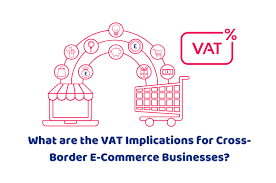
How to Structure Cross-Border E-Commerce So You Legally Minimise VAT and GST
Cross-border e-commerce creates opportunity fast, but it also creates tax friction fast. The mistake many online sellers make is assuming that VAT or GST is simply a fixed cost of growth. It is not. In many cases, the real problem is not the tax itself, but a weak commercial structure: the wrong entity is selling, the wrong country is treated as the place of taxation, the wrong registration path is used, or the business is charging tax where the law does not actually require it. VAT/GST systems are built around the idea that consumption should generally be taxed where it takes place, not wherever the seller happens to be based. When sellers ignore that, they often create either double taxation or unnecessary tax leakage.
That is the starting point for any serious e-commerce tax strategy: do not ask how to avoid tax in the abstract; ask where tax is actually due, who is legally supposed to collect it, and whether your current structure is making you pay more than necessary. For EU sellers in particular, VAT treatment changes depending on whether you are selling goods or services, whether the customer is a business or a consumer, whether the goods move across borders, and where the goods are located when transport begins and ends. Those are not technical details for accountants to sort out later. They are the core architecture of whether your business is structured efficiently or expensively.
Start with the transaction map, not the tax return
Most businesses think about tax too late. They look at VAT only once sales are already flowing, stock is already moving, and invoices are already being issued. That is backwards. The smarter approach is to map the transaction first: which entity sells, where stock sits, where the customer is, whether the customer is B2B or B2C, and whether the sale is direct or made through a platform. In the EU, the place of taxation for many supplies of goods depends on where the goods are located when dispatch begins, while intra-EU distance sales to private consumers are generally taxed where dispatch ends. For many B2B services, the place of taxation is where the customer is established. If you do not design around those rules, you will end up retrofitting your tax logic around the wrong commercial flow.
This is exactly why some e-commerce businesses seem to “pay less” than others without doing anything aggressive. They are simply structured better. They know which sales are exports, which are intra-EU B2B, which are intra-EU B2C, and which fall under a simplification regime. They do not treat every sale as though it were a domestic consumer transaction. That is the difference between a tax-efficient structure and a lazy one.
B2B and B2C should never be treated as the same thing
One of the biggest causes of unnecessary VAT leakage is failing to separate B2B and B2C flows. In the EU, if you sell goods to a VAT-registered business in another EU country and the conditions are met, you generally do not charge VAT on that sale. If you sell services to businesses in another EU country, you also do not usually charge VAT; instead, the customer accounts for VAT under the reverse-charge procedure. But if you sell to final consumers, the treatment is often different, especially for cross-border distance sales of goods. A business that lumps all customers together usually ends up charging too much tax, documenting too little, or both.
This matters commercially. If your setup does not distinguish properly between business customers and final consumers, you are likely either reducing competitiveness by adding VAT where it is not due, or creating compliance risk by removing it where it is due. In both cases, the underlying problem is the same: the structure is not aligned with the legal reality of the transaction.
Stock location changes everything
A lot of founders think the customer’s location is the only thing that matters. It is not. Where your stock sits is often just as important. The European Commission’s VAT guidance makes clear that for goods, one basic rule is that where goods are not transported, the place of taxation is where the goods are located at the time of supply, and where goods are transported, the place of taxation starts from where dispatch begins unless a specific distance-selling rule applies. That means warehousing decisions are tax decisions. The moment you start moving stock into additional countries, your VAT footprint can become more complex very quickly.
That is why tax-efficient e-commerce structuring is not only about the website or checkout. It is also about fulfilment design. If inventory is scattered across jurisdictions without a clear plan, local registrations, local filing obligations, and extra compliance layers can appear faster than the business expects. Many sellers do not have a VAT problem because rates are high. They have a VAT problem because their stock model created a footprint they never planned for.
Use simplification regimes before you create filing chaos
For many EU online sellers, the One Stop Shop is one of the clearest examples of compliant tax minimisation through better structure. The European Commission states that online sellers can register in one EU Member State for VAT on all eligible distance sales of goods and cross-border supplies of services to customers within the EU, and that OSS can reduce red tape by up to 95%. The Commission also states that the old national distance-selling thresholds were replaced by one EU-wide threshold of EUR 10,000. That means many businesses do not need to create a fragmented local-registration footprint immediately; they first need to understand whether OSS already solves a large part of the problem.
This is the kind of optimisation that actually matters. Not fake “tax hacks,” but using the legal framework properly before you overcomplicate your structure. A business that registers everywhere too early usually does not become safer. It becomes slower, more expensive, and harder to control.
The goal is not aggressive tax planning. It is clean tax architecture.
The best e-commerce tax setup is usually boring. It is clear on who sells, clear on where stock sits, clear on whether the customer is B2B or B2C, clear on when VAT is charged, and clear on when it is not. It uses zero-rating, exemptions with the right to deduct, reverse charge, and simplification regimes where the law allows them. It does not improvise country by country after the fact.
That is exactly where eCompliance should sit in the market. Not as a party selling vague promises about “paying no tax,” but as the partner that helps e-commerce businesses build a structure in which they stop paying unnecessary VAT/GST, stop charging it wrongly, stop registering where they do not need to, and start operating in a way that is both lean and defensible. Because in cross-border e-commerce, the winners are usually not the businesses with the cleverest slogans. They are the businesses with the cleanest setup.
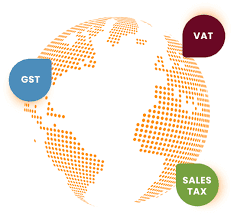
How to Legally Reduce VAT and GST in E-Commerce Without Taking Unnecessary Risk
Indirect tax is one of the biggest silent margin killers in e-commerce. Not because VAT or GST rates are always too high, but because many online sellers are structured badly. They register where they do not need to, charge tax where it is not due, miss simplification schemes, mis-handle imports, or create cash-flow pain by paying tax too early and recovering it too late. The result is predictable: lower margins, more admin, and more compliance risk than necessary.
That is the first point serious e-commerce founders need to understand: the goal is not to “pay no tax” in some fantasy sense. The real goal is to pay no more VAT or GST than is legally required, in the correct country, at the correct time, under the correct regime. In most jurisdictions, VAT/GST is a consumption tax, which means the real question is not “how do we escape tax?” but “where is tax actually due, who is supposed to collect it, and are we creating avoidable leakage by using the wrong setup?” The OECD’s international VAT/GST guidance follows that same destination-based logic for cross-border trade.
A lot of overpayment starts with getting the place of taxation wrong. In the EU, VAT on many B2C online sales is linked to the customer’s country, while exports of goods outside the EU are not charged with EU VAT if the exporter can prove the goods left the EU. For many cross-border B2B services inside the EU, the supplier does not usually charge VAT at all; instead, the business customer accounts for it under the reverse-charge mechanism. If you treat everything as a domestic sale just to “be safe,” you are not being safe. You are often being expensive and wrong.
The second big lever is using simplification regimes properly. In the EU, online sellers can use the One Stop Shop to register in one Member State for eligible cross-border B2C sales and report VAT centrally instead of fragmenting filings across multiple countries. The European Commission explicitly says OSS can reduce red tape by up to 95%. That matters because over-registration is a real cost. If your structure forces multiple local filings when a centralized scheme could have covered the sale, you are not being conservative. You are wasting time and money.
The third lever is understanding when the marketplace, not the seller, is legally responsible for collection. In the EU, certain marketplace sales involving non-EU sellers or imported goods up to EUR 150 can make the platform the deemed supplier for VAT purposes. Similar logic exists in other countries. In the UK, for example, online marketplaces can become liable for VAT on certain consignments and for goods already in the UK that are sold by overseas businesses through the platform. In Singapore and Canada, platform operators can also become responsible for collecting GST/HST in certain digital-economy and low-value-goods scenarios. If you ignore that and collect tax again yourself, or register everywhere without checking who the law actually makes responsible, you build duplicate tax friction into your own model.
Another overlooked area is import VAT cash flow. Many founders accept import VAT pain as inevitable, even when a better setup could defer or simplify the timing. In the UK, postponed VAT accounting allows eligible businesses to account for import VAT on their VAT return instead of paying it immediately at the border. That does not eliminate tax, but it can remove unnecessary cash drag. That distinction matters. Good tax strategy is often less about lowering nominal liability and more about avoiding trapped cash, duplicate charging, and compliance sprawl.
The businesses that consistently pay less indirect tax are rarely the ones doing anything aggressive. They are usually just structured better. They know which sales are export sales, which are domestic, which are platform-collected, which can be handled through OSS or IOSS, and where import VAT can be postponed, recovered, or avoided from hitting the wrong entity in the first place. That is what legal tax minimization looks like in e-commerce: not tricks, but precision.
If your store is still treating VAT, GST, and import tax as a finance afterthought, you are probably leaking margin already. The right question is not whether tax exists. It is whether your current structure is forcing you to pay it in the dumbest possible way.

Hoe je compliance-risico's voor je online winkel kunt verminderen
Het beheren van compliance kan complex aanvoelen, vooral omdat regelgeving blijft evolueren. Een gestructureerde aanpak kan de risico’s echter aanzienlijk verminderen.
Begin met het controleren van je juridische pagina’s, zorg ervoor dat je afrekenproces transparant is en verifieer dat je gegevensverwerkingspraktijken in lijn zijn met de GDPR-vereisten.
Door je webshop regelmatig te controleren en bij te werken, kun je potentiële problemen voorblijven en een professionele, conforme online aanwezigheid behouden.

Waarom duidelijke productinformatie essentieel is
Het verstrekken van duidelijke en nauwkeurige productinformatie is zowel een wettelijke vereiste als een belangrijke factor bij het stimuleren van conversies. Klanten moeten begrijpen wat ze kopen voordat ze een beslissing nemen.
Dit omvat details zoals productspecificaties, prijzen, beschikbaarheid en levertijden.
Onvolledige of misleidende informatie kan leiden tot klachten, retourzendingen of zelfs juridische gevolgen. Door transparant en informatief te zijn, creëer je een soepelere koopervaring en verklein je potentiële risico’s.

Wanneer voldoet je webshop aan de wet?
Een webshop wordt als compliant beschouwd wanneer deze alle wettelijk vereiste informatie op een duidelijke en toegankelijke manier verstrekt. Dit omvat pagina’s zoals algemene voorwaarden, een privacybeleid, retourbeleid en bedrijfsgegevens.
Daarnaast moet het afrekenproces transparant zijn. Klanten moeten precies begrijpen wat ze kopen, wat het kost en wat ze kunnen verwachten na het plaatsen van een bestelling.
Compliance gaat niet alleen over het vermijden van boetes—het draagt ook bij aan een betere gebruikerservaring en meer klantvertrouwen.

Basisprincipes van de AVG voor e-commercebedrijven
Als u een online winkel runt, verzamelt u waarschijnlijk persoonsgegevens zoals namen, e-mailadressen en verzendgegevens. Onder de AVG bent u verantwoordelijk voor het zorgvuldig en transparant verwerken van deze gegevens.
Dit betekent dat u duidelijk uitlegt hoe gegevens worden gebruikt, alleen verzamelt wat noodzakelijk is en ervoor zorgt dat ze veilig worden opgeslagen. Klanten moeten ook de mogelijkheid hebben om toegang te krijgen tot hun gegevens of om verwijdering ervan te verzoeken.
Het begrijpen en implementeren van deze principes is essentieel voor elk modern e-commercebedrijf dat actief is in de EU of klanten in de EU bedient.